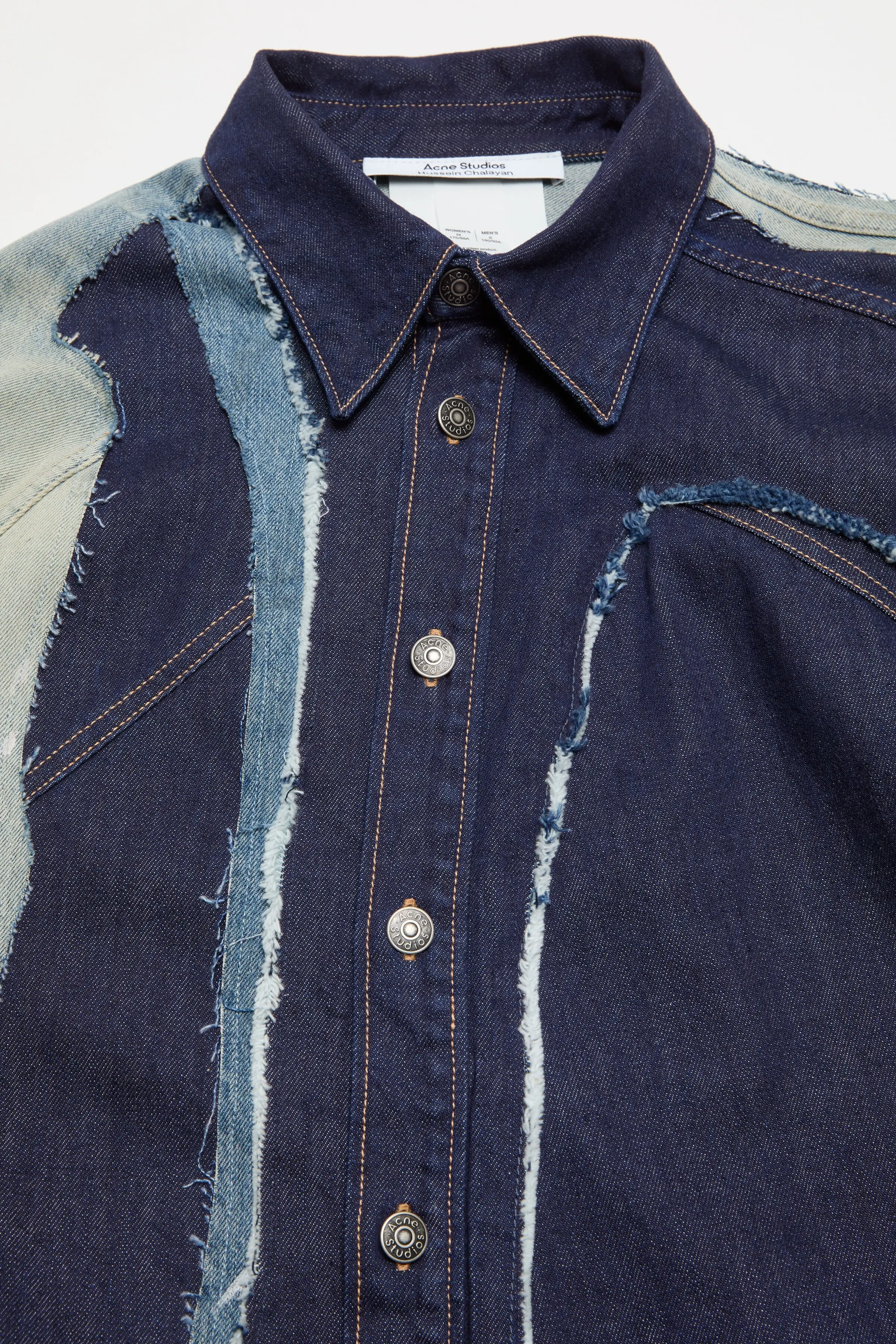
Culture(18 OCTOBER)
The Tabi Code
A shoe that splits opinion started as a Japanese sock, became a work boot for miners and builders, and walked into Paris on a heel in 1988. What the split toe means, and why some people love it and others can't look at it.
- Published
- Read
- 4 min
- Nº
- 15
- Format
- Unfolded
One detail, closely read
The split toe
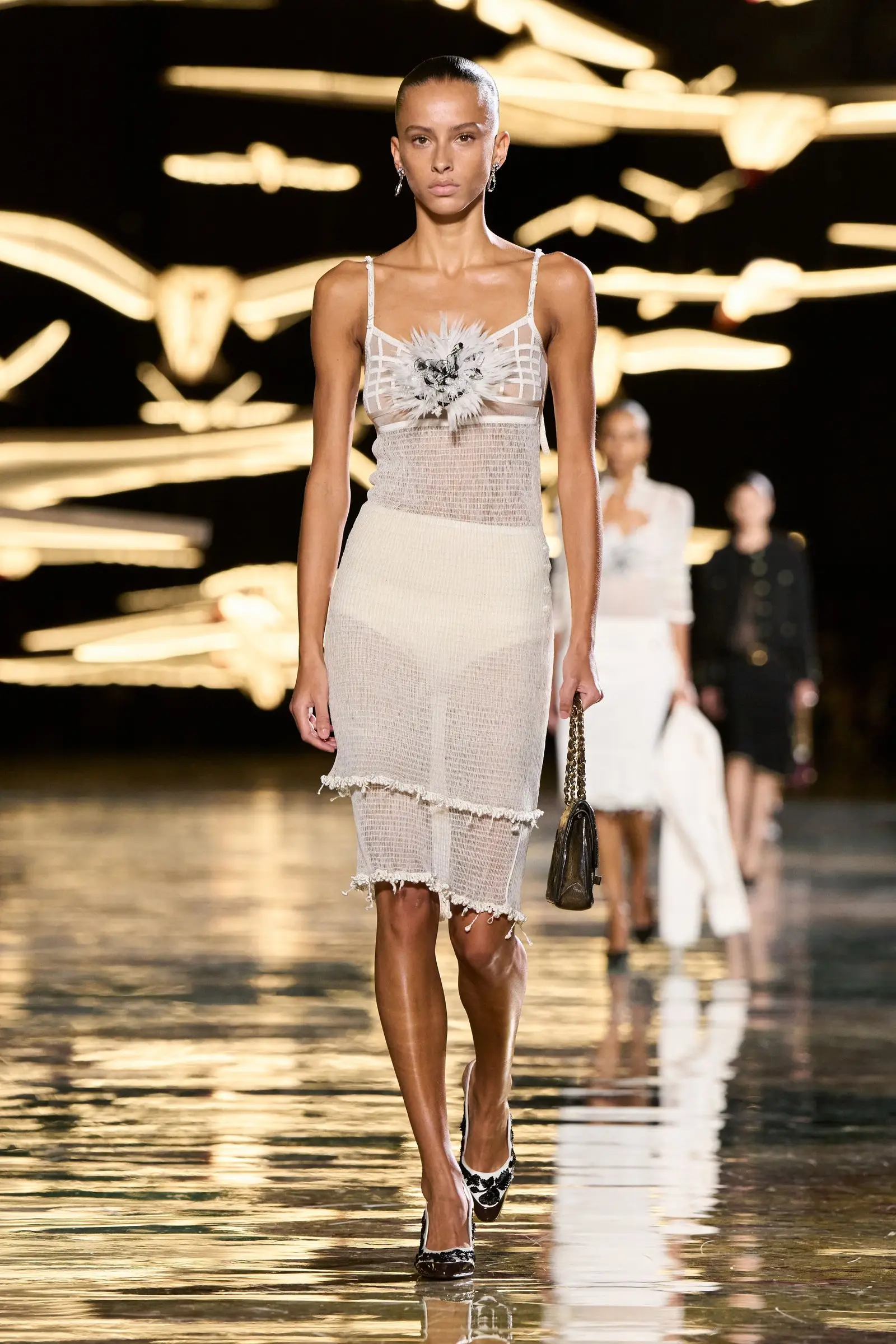
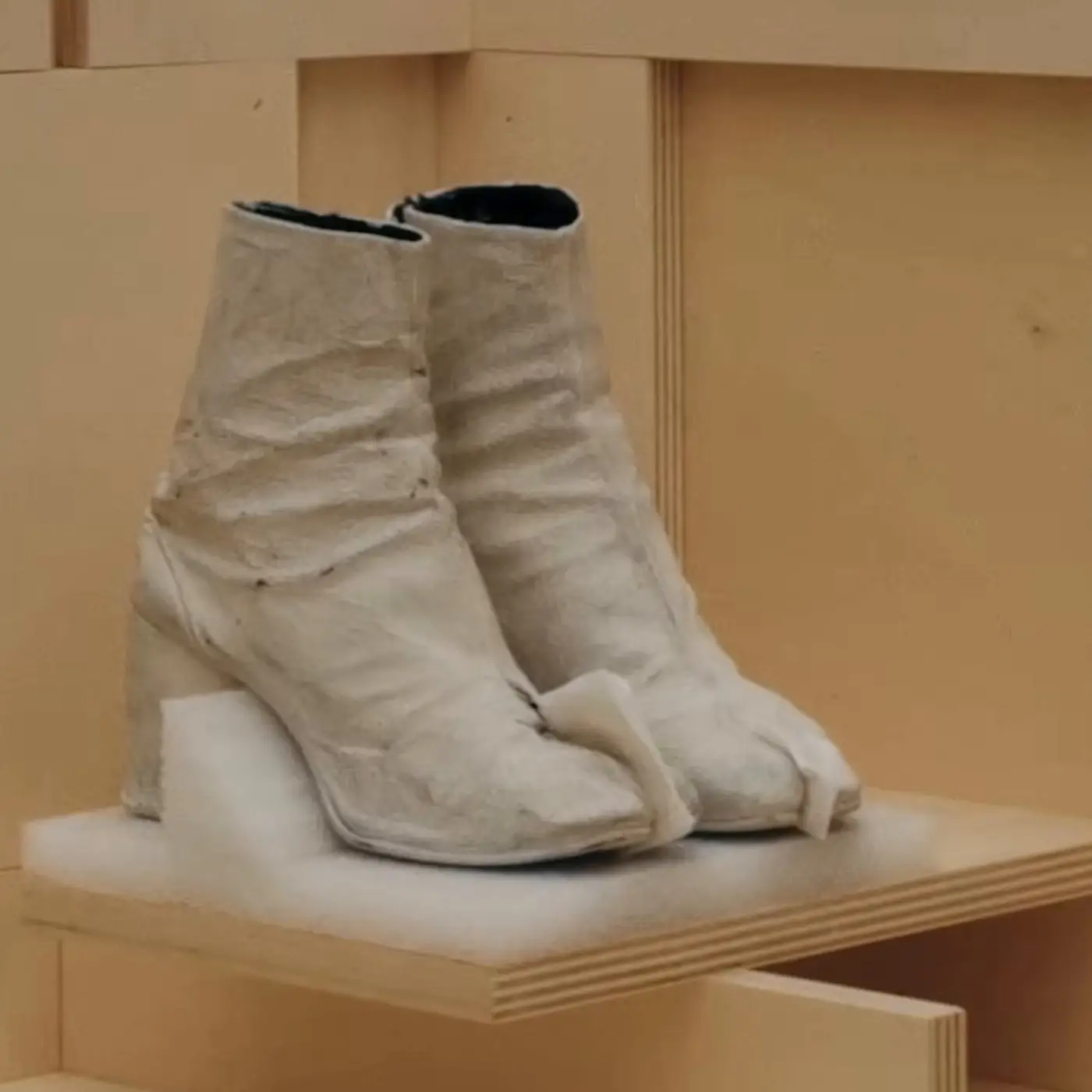 Full look
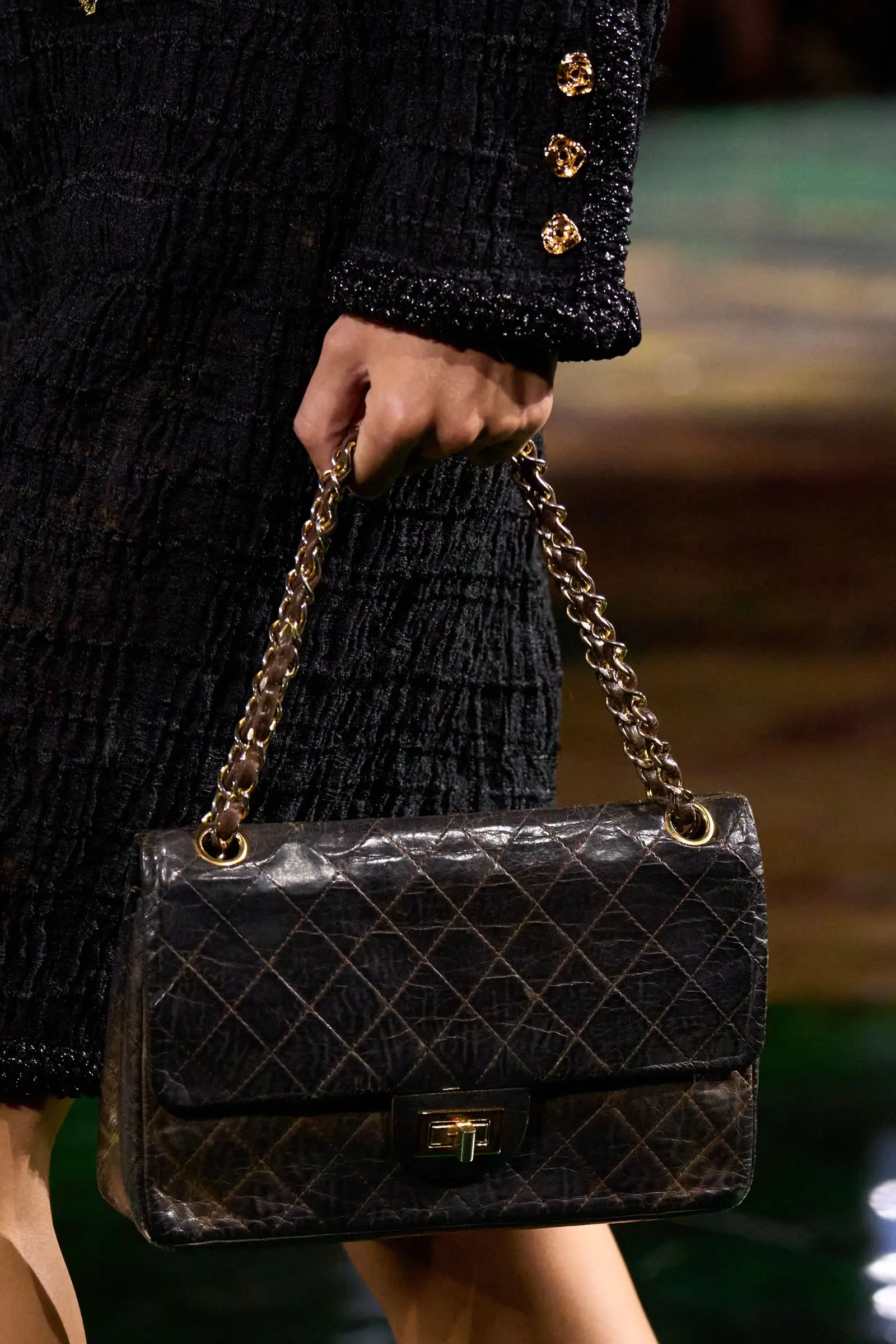
 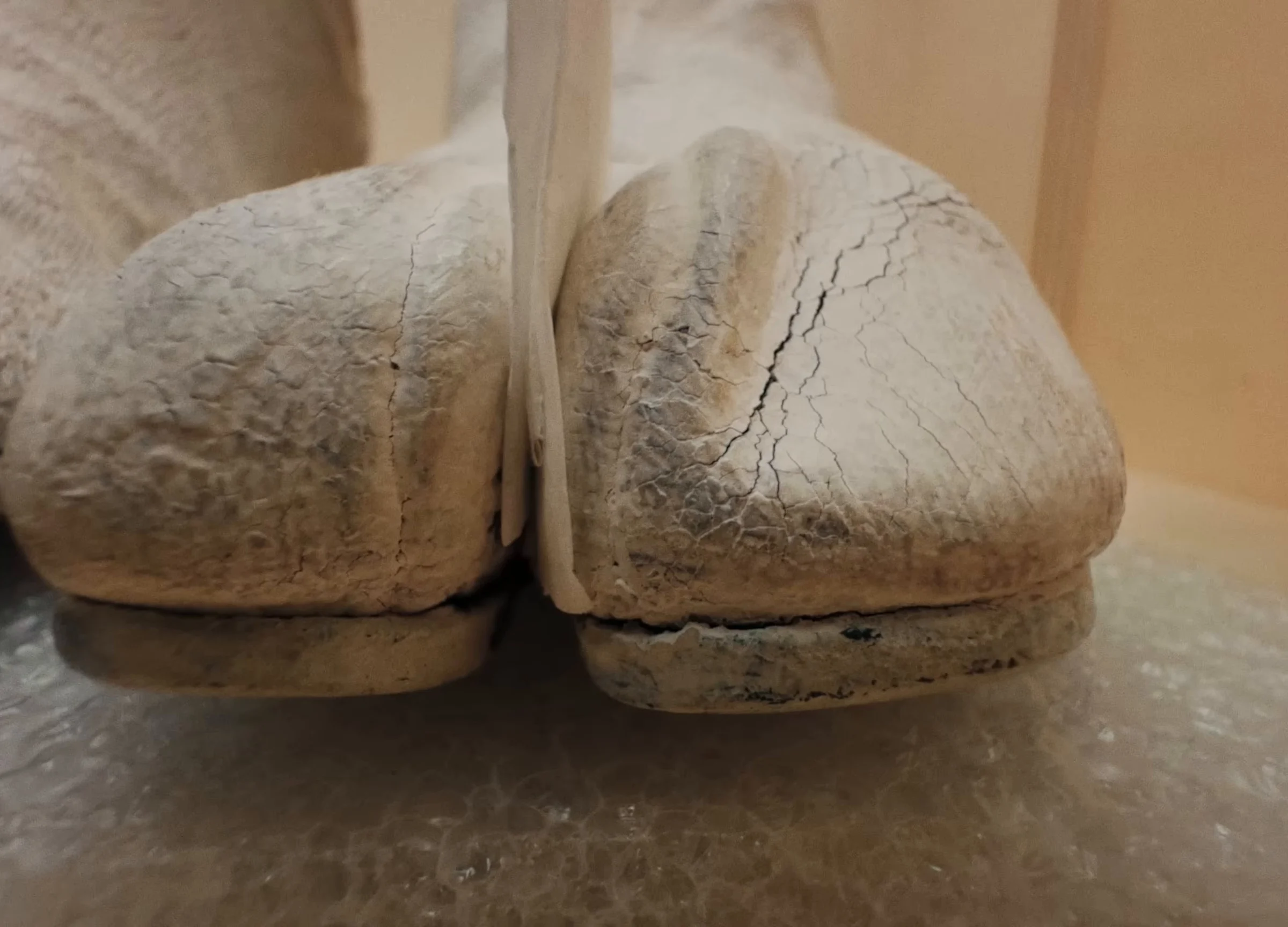 Closer, a second photo of the same look
 - What
- A boot that splits the big toe from the other toes, like a Japanese tabi sock.
- How
- The house says the leather is cut to follow the contour of the foot. This old pair has been painted white, and the paint is cracking.
- Why
- Most shoes hide the shape of the foot. This one draws it.
Maison Margiela · Archive pair · Video still: Maison Margiela, A Tabi Film
Some shoes get a compliment. The Tabi gets an argument. To some people it looks like a hoof. To others it is the only boot worth wearing.
Both sides are reacting to the same thing: one line of stitching that splits the big toe from the rest. That line has a long history, and almost none of it starts in fashion.
First, a sock
Tabi are Japanese socks with a separate pocket for the big toe. The split is practical: it lets the sock sit around the thong of a sandal, like a zori or a geta. Museum records date the design back at least to the fifteenth century. The V&A notes that split toe socks were once thought to help the body’s balance, and that at first they were worn by people with time and money to spare.
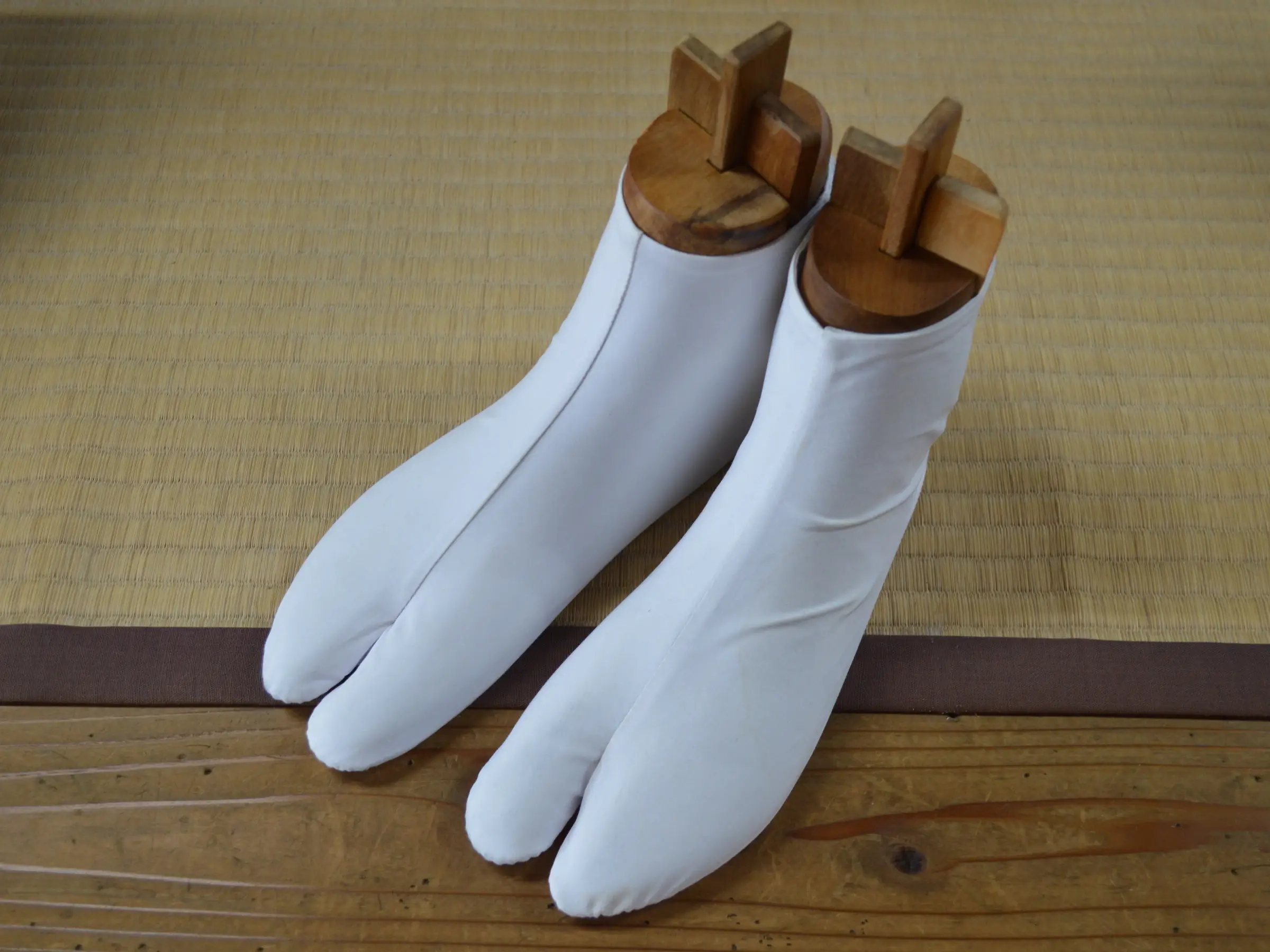
Then, a work boot
The big change came with rubber. In the early 1920s, tabi makers in the city of Kurume tried to put rubber soles on cotton tabi so people could wear them outside. Sewn soles kept tearing loose. One firm, Nihon Tabi, solved it by gluing the rubber on instead. According to the company’s own history, about a thousand coal miners at the Mitsui Miike mine tested the first pairs, and found they did not slip on the way up and down the shafts. The boot went on sale in January 1923 as Asahi jika tabi. The name stuck so well that “jika tabi” became the everyday word for the whole type.
Here is the fun fact: the money from those boots helped build a tyre company. The family behind Nihon Tabi went on to found Bridgestone, which still calls jika tabi the origin of its tyre business.
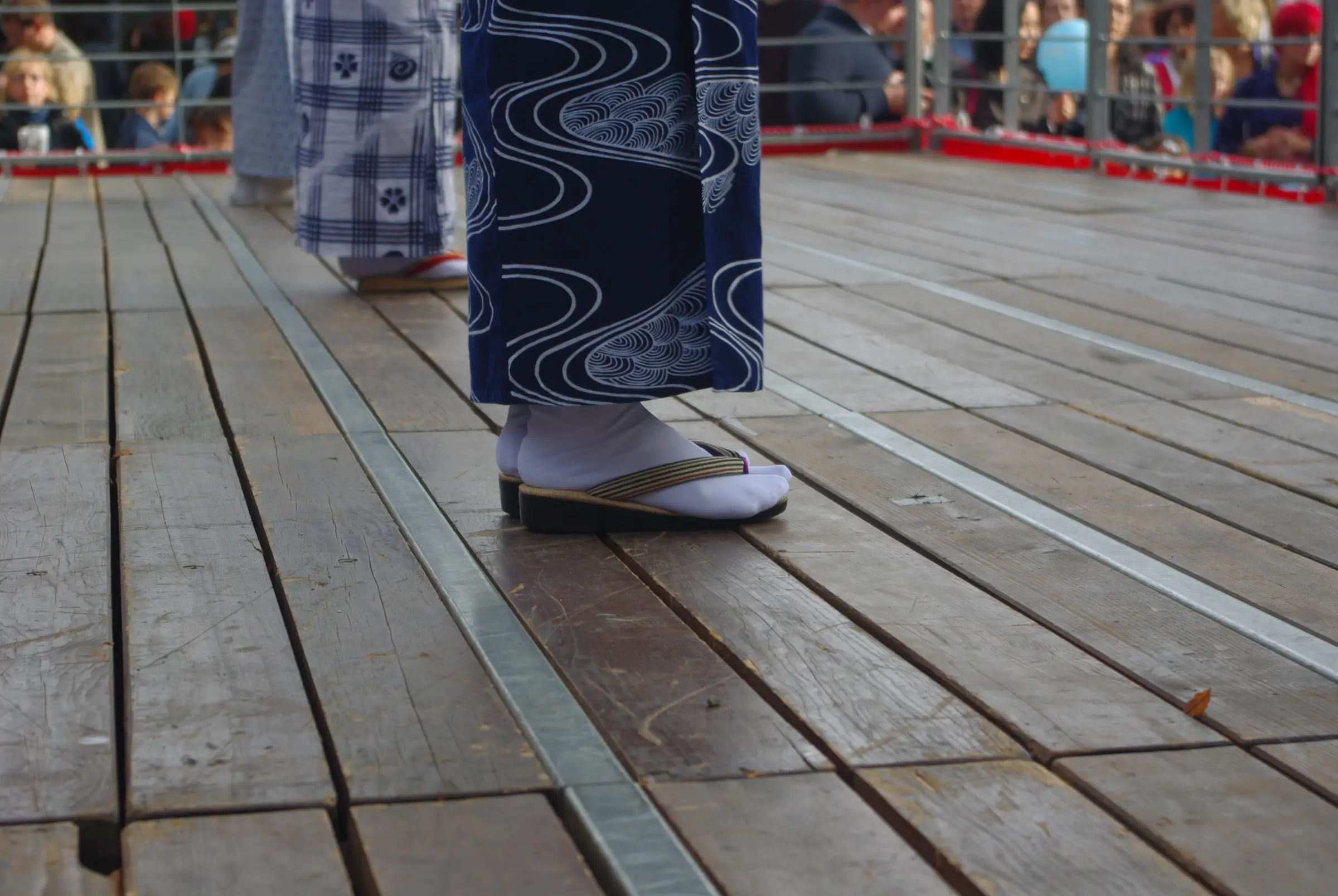 With a sandal A white tabi sock worn with a zori, at a Japanese festival in Geneva. Photo: Clément Bucco-Lechat, CC BY-SA 3.0
 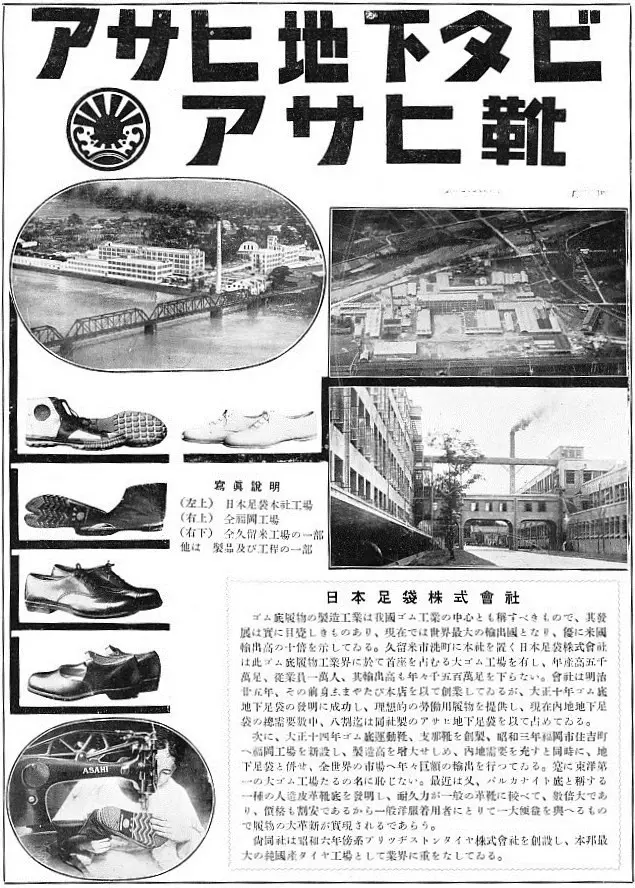 With a rubber sole An advert for Asahi jika tabi, 1930s. Nihon Tabi advert, public domain
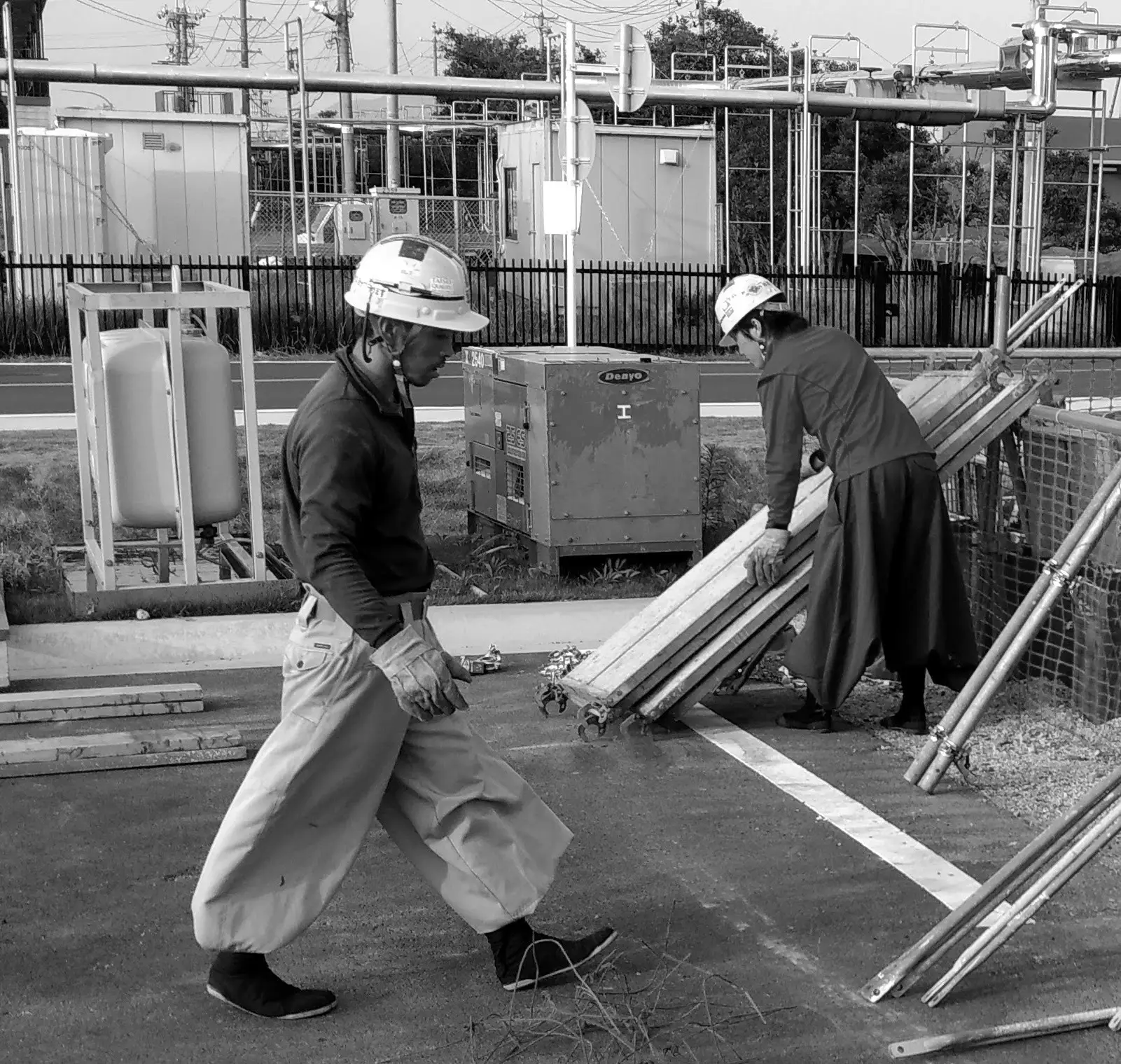
 The V&A puts it simply: with cheaper cotton and rubber soles, the tabi became the standard footwear of blue collar workers. They are still worn on building sites, like this one in 2016.
Then, Paris
In April 1984, a young Belgian designer named Martin Margiela travelled to Japan. The Palais Galliera, the Paris fashion museum, says that is where he saw jika tabi, worn by builders, craftsmen and gardeners.
Four years later, in 1988, he showed his first collection, for Spring Summer 1989. On the models’ feet was a new boot: the split toe of the tabi, on a heel. The house says the soles were dipped in paint, so every step left a split toe print across the white runway. Afterwards, the V&A says, Margiela turned that printed floor cloth into a waistcoat held together with masking tape.
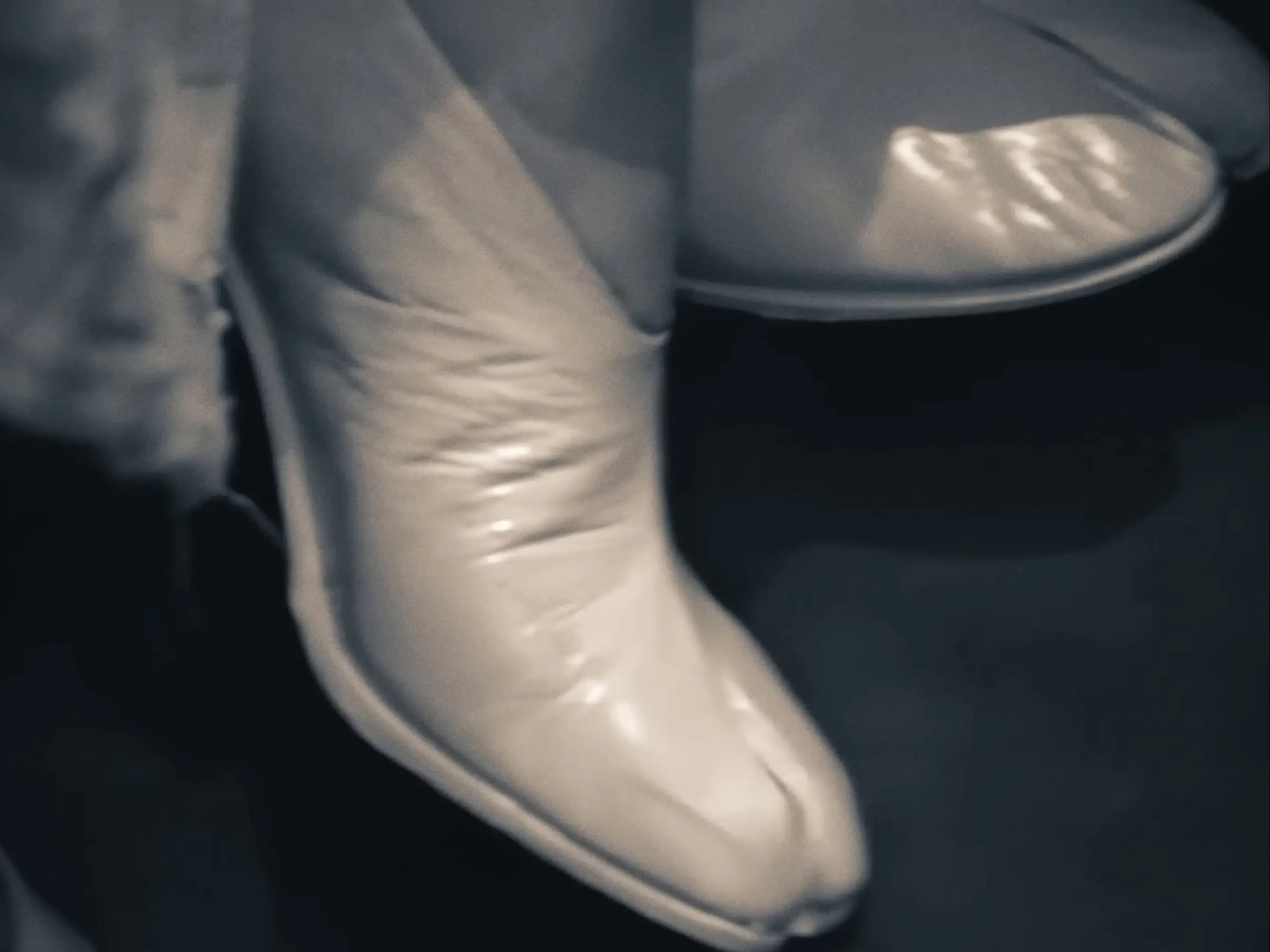
What was he after? The Palais Galliera gives the clearest answer. He wanted an invisible shoe, one that did not look like a shoe at all, but like a bare foot standing on a sole and a high heel. That was impossible, so he faked it, using leather the colour of skin. The heel follows the same idea. The house describes it as a wide round heel “mirroring the diameter of the human heel.”
- 1400s The tabi sock A split toe sock, worn with thonged sandals.
- 1923 Asahi jika tabi A glued rubber sole. Miners test it first.
- 1984 Margiela in Japan He sees jika tabi on builders and gardeners.
- 1988 The first show The split toe on a heel. Painted soles print the runway.
- 1991 Tag it At the Palais Galliera, visitors write on white painted pairs.
- 2014 to 2024 More shapes Under John Galliano: split toe loafers, cowboy boots, a stiletto.
- 2025 The house film Eleven artisans, every stage by hand.
The hooks came too
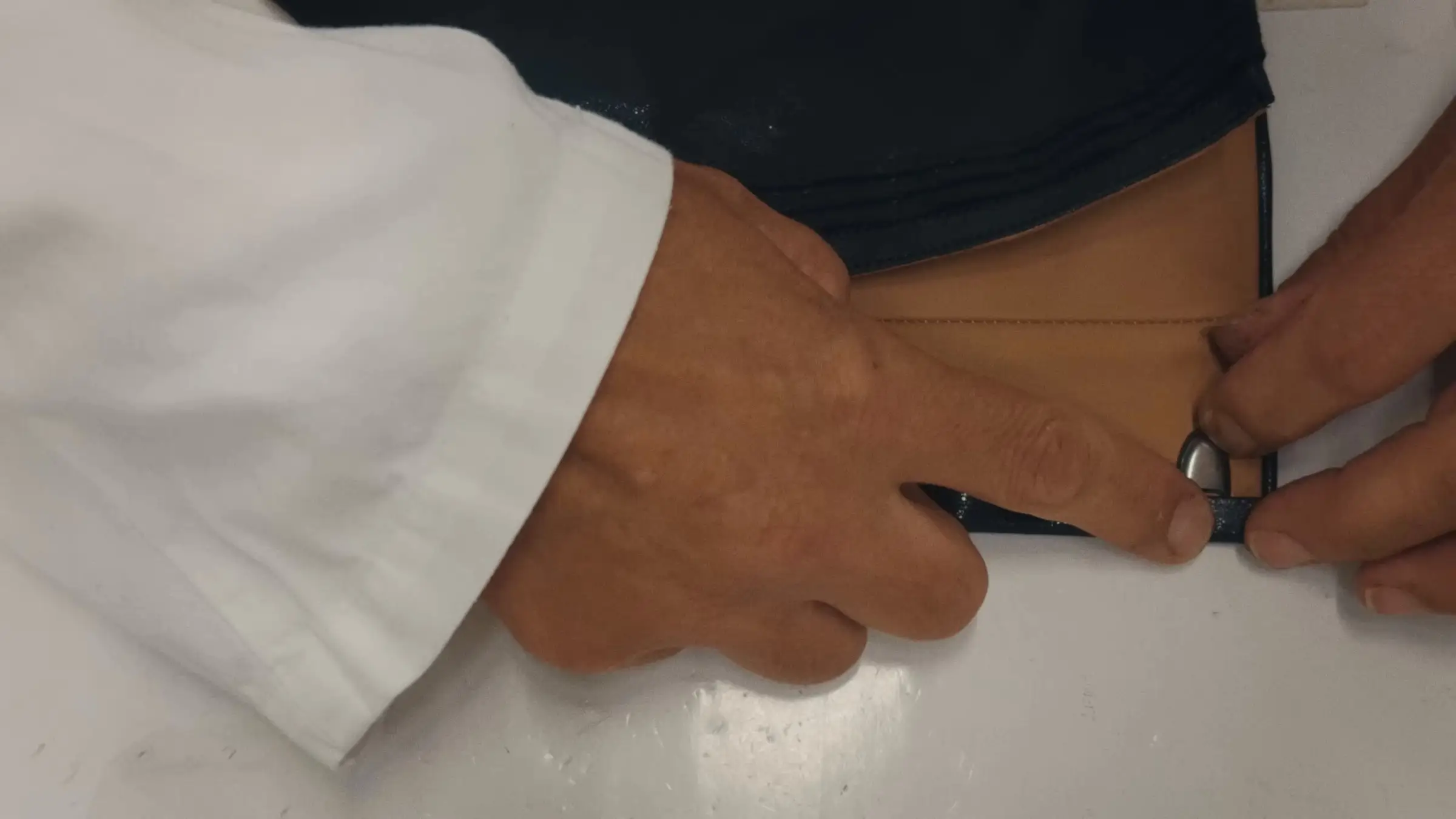
Look at the inside of the ankle. Margiela did not only borrow the toe. He kept the way a tabi sock closes: a row of flat metal clasps called kohaze, which hold it snugly around the ankle. In the house film, they are still set by hand.
Old pairs, painted white
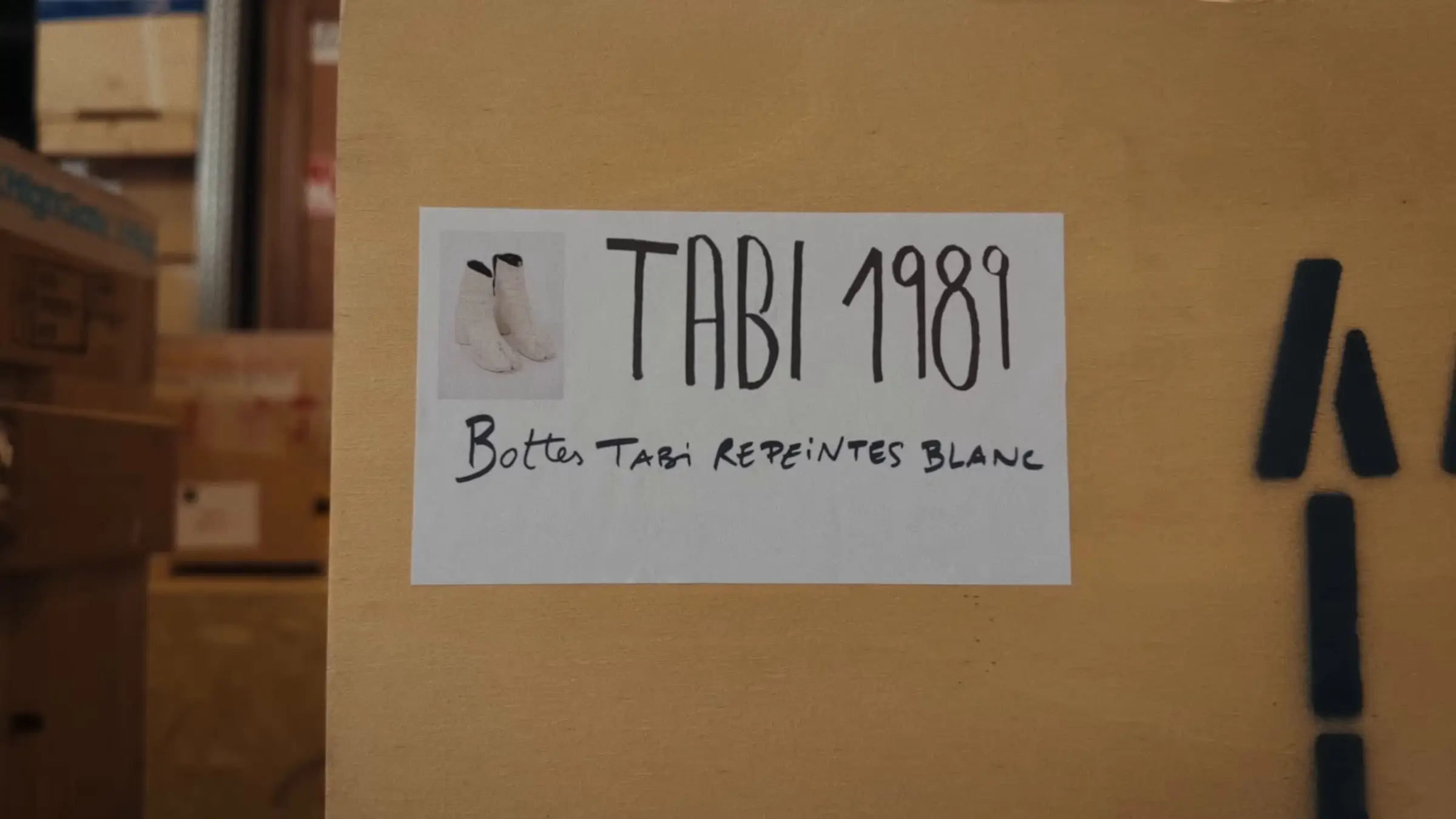
The early Tabi was expensive to make, and the young house had little money. So the same boots came back, show after show. The Palais Galliera says Margiela sometimes took pairs from older shows and simply painted them white. On one pair in its collection, you can still see the original pale suede under the paint.
In 1991 he went further. Invited to show at the Palais Galliera, he put three pairs of white painted Tabi on a podium and asked visitors to tag them with markers. The museum’s records include a Spring Summer 1989 Tabi, painted white and covered in graffiti and first names.
Reusing them turned out to be the best marketing the house never planned. “After several collections people started asking for them,” as Margiela later put it, quoted by the V&A. “And they wanted more… and they didn’t stop asking, thank God!”
Still made by hand
The house says every stage of a Tabi is still done by hand. Preparing the base takes up to four hours. The mould is cut from a block of wood. Then come stitching and assembly, and each shoe is finished with a single white stitch.
Why it divides people
Here is our reading of the argument.
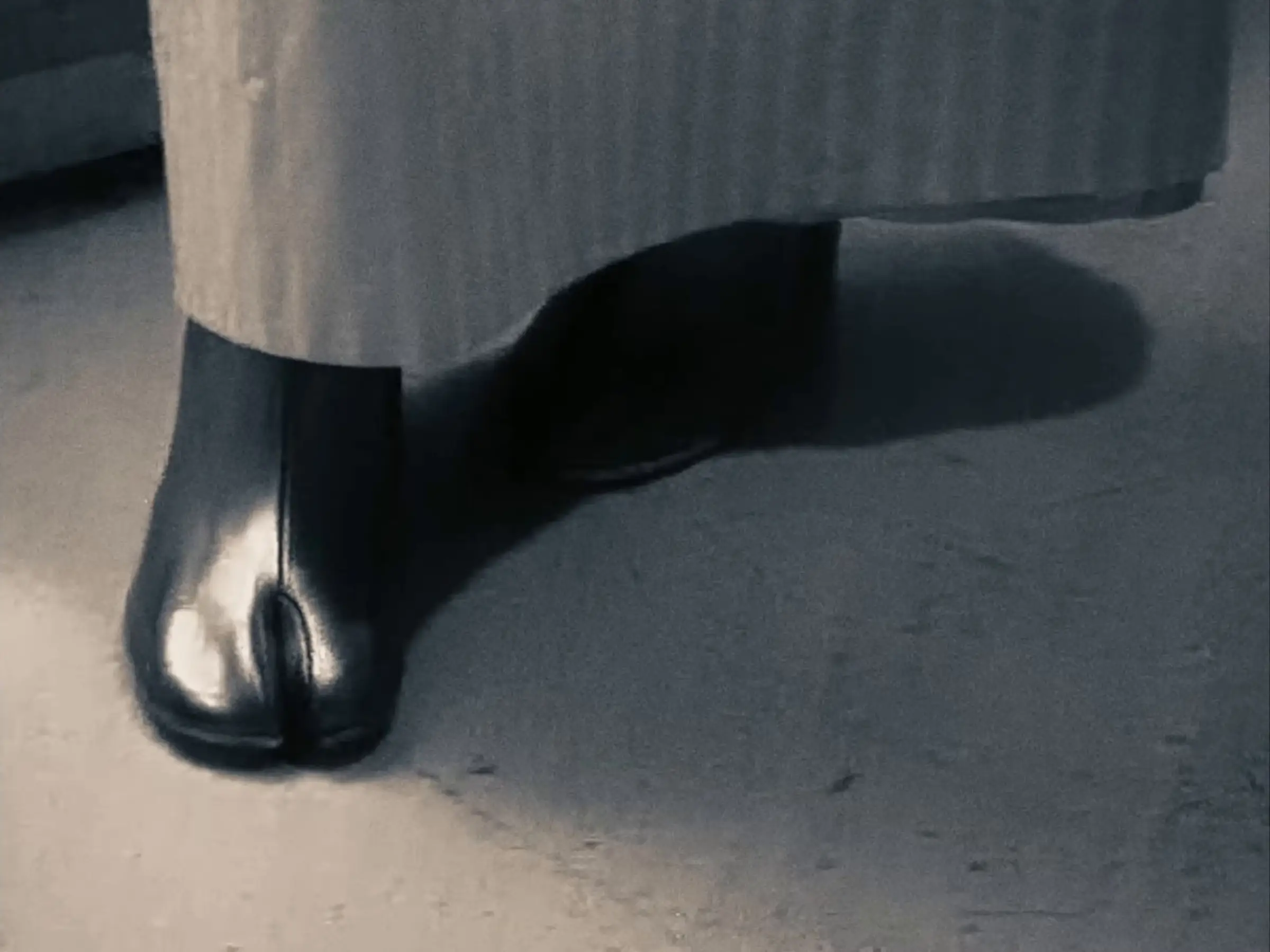
Most shoes are designed to make feet disappear. A pointed toe, a round toe, a sneaker: they all turn five toes into one smooth shape. The Tabi refuses. It draws the line where your big toe really ends. That is why some people feel it is too much body, and others feel it is the first shoe that tells the truth.
There is also a class story in it, and we think that is the most interesting part. A sock for people with leisure became a boot for miners, builders and gardeners, and then a Paris designer boot. The shape hardly changed. Only who was wearing it did.
In 2015, Margiela called the Tabi “the most important footprint of my career.” It is a good joke, and it is also true. Every pair still leaves the same mark.
Your turn: the Tabi is everywhere now. Is it still a strange shoe, or has it become just a shoe?

Free with The Letter · PDF
The Detail Glossary.
50 terms to read clothes by, from bias cut to bartack. One plain line on what each one is, one line on where to spot it. Join The Letter and the download is yours straight away. Then one email every other Sunday: three details, five minutes.
Your address is used only to send The Letter. It is stored by our host, Netlify, and never sold or shared. Reply "stop" to any edition and you are off the list. What an edition looks like.